Wheelchair Service Training Package (WSTP)
Competency-based professional development in wheelchair assessment, prescription, preparation, fitting, user training, follow-up and service management.
Quick answer
Competency-based professional development in wheelchair assessment, prescription, preparation, fitting, user training, follow-up and service management. Mobility India publishes WSTP Basic, Intermediate and Manager-level training information. Confirm upcoming batch dates and delivery mode.
Course overview & learning context
This page is designed as a complete decision guide rather than a short brochure. It explains the learning scope, admission questions, curriculum themes, practical exposure, career pathways, salary context and next steps.
Prosthetics and orthotics education sits at the intersection of health sciences, biomechanics, materials, design, fabrication, clinical assessment and rehabilitation. Related short courses in wheelchair service and rehabilitation build competencies in assistive technology, functional support and person-centred service delivery.
Students should use this portal for orientation, then verify all time-sensitive academic details with the official admissions contact before paying fees or submitting documents.
Eligibility & admission readiness
Published / current basis
- Designed for health, rehabilitation and technical personnel, community rehabilitation workers, OTs, PTs, prosthetists, orthotists, technicians, craftspeople and wheelchair users depending on level.
- Manager-level training is intended for people responsible for implementing, managing and evaluating rehabilitation and wheelchair services.
Before you apply
- Check that your qualifying education meets current requirements.
- Ask whether equivalence or RCI/university recognition documents are needed.
- Request current fees, application deadline and document checklist.
- Confirm the selection process and class commencement date.
Syllabus & curriculum themes
Basic service delivery
Assessment, prescription, preparation, fitting, user instruction, maintenance, follow-up and integration into rehabilitation services.
Intermediate seating & postural support
Mobility and postural-support needs, seating solutions, cushions, postural support devices and more complex service delivery.
Manager module
Service planning, people leadership, implementation of wheelchair service-delivery steps, costing/funding concepts, monitoring and evaluation.
User-centred outcomes
Matching the wheelchair and seating solution to mobility, postural, environmental and participation needs.
Hands-on competency
Practical skill development is central; individual batches may combine online theory and hands-on components.
Wheelchair service competency pathway
Assess
Understand the wheelchair user, environment, mobility and postural needs.
Prescribe
Select a suitable wheelchair, cushion and support strategy.
Prepare & fit
Configure, adjust and fit the solution with safety and function in mind.
Train
Support the user and carer with mobility, use, maintenance and pressure-management practices.
Follow up
Review comfort, fit, function, participation and the need for adjustments.
Improve services
Use structured service-delivery and management concepts to improve quality and access.
Career scope after the course
Wheelchair service provider skill enhancement
Role scope depends on qualification, registration requirements, employer policy, experience and local regulations.
Seating and mobility service role development
Role scope depends on qualification, registration requirements, employer policy, experience and local regulations.
Rehabilitation professional upskilling
Role scope depends on qualification, registration requirements, employer policy, experience and local regulations.
Assistive technology programme roles
Role scope depends on qualification, registration requirements, employer policy, experience and local regulations.
Wheelchair service coordination / management
Role scope depends on qualification, registration requirements, employer policy, experience and local regulations.
Training and capacity-building roles after suitable experience
Role scope depends on qualification, registration requirements, employer policy, experience and local regulations.
Career planning questions to ask
Ask for recent job titles, sectors, geographic destinations, placement process, internship conversion, higher-study pathways and the difference between starting salary, median salary and highest package.
Salary & earning potential
Use salary data carefully
WSTP is professional development rather than a standalone salary-bearing degree. Its value is in strengthening wheelchair-service competencies; salary impact depends on the participant’s base profession, employer, role scope and experience.
Placement, employers & professional ecosystem
This is best presented as continuing professional development. The relevant outcome is improved competency and service capacity rather than a conventional campus-placement promise.
Examples below are displayed as neutral nameplates rather than copied trademark artwork. Before enrolling, request the latest placement report and clarify which organisations are current recruiters, internship hosts, alumni employers or simply sector examples.
Organisation names are shown as career-ecosystem examples referenced in Mobility India’s published BPO/MPO career information. They do not imply that every organisation is a current placement partner or that employment is guaranteed.
Skills you can build
Clinical reasoning
Assess needs, identify goals and connect clinical findings with an appropriate rehabilitation or assistive-technology plan.
Technical problem solving
Understand materials, components, fit, alignment, fabrication or configuration decisions relevant to the programme.
Communication
Work with users, families and multidisciplinary teams using respectful, clear and person-centred communication.
Evidence-informed practice
Use research, outcome measures and reflective practice to improve decisions and service quality.
Documentation & ethics
Develop habits around records, consent, professional boundaries, safety and accountability.
Inclusive practice
Connect rehabilitation outcomes with education, livelihood, participation, accessibility and community inclusion.
Student experience & practical exposure
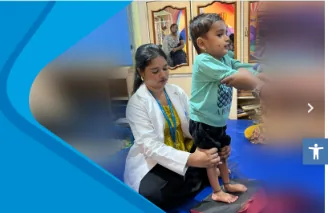

Images are cropped from the Mobility India website screenshot supplied for this redesign.
Admission checklist
Academic documents
Marks cards / transcripts, qualifying certificate and any equivalence documents requested for your category.
Identity & category documents
Keep current identity, category/reservation and nationality documents ready where applicable.
Recognition / registration
For lateral entry, postgraduate or professional routes, ask whether RCI recognition/registration evidence is required.
Fees & funding
Request the current fee schedule, payment milestones, scholarship guidance and education-loan support information.
Dates
Confirm application closing date, selection timeline, university calendar and class commencement.
Written confirmation
For any important eligibility or fee question, obtain the latest official written response before taking action.
Get the current WSTP admission details
Ask about eligibility, fees, syllabus, application dates, documents, scholarships, student support and career outcomes.
Frequently asked questions
Competency-based professional development in wheelchair assessment, prescription, preparation, fitting, user training, follow-up and service management.
The current information used for this portal is: Basic, Intermediate and Manager pathways; batch duration varies. Where a batch or institutional approval can change, confirm the current duration with admissions.
Designed for health, rehabilitation and technical personnel, community rehabilitation workers, OTs, PTs, prosthetists, orthotists, technicians, craftspeople and wheelchair users depending on level.
Confirm current eligibility, recognition/affiliation where applicable, fee structure, application deadline, required documents, selection process, commencement date and seat availability directly with Mobility India admissions.
The programme information emphasises practical, clinical or hands-on learning appropriate to the course. The exact clinical hours, internship, workshop schedule or batch format should be confirmed for the current academic cycle.
Potential pathways include Wheelchair service provider skill enhancement, Seating and mobility service role development, Rehabilitation professional upskilling, Assistive technology programme roles. Specific job eligibility depends on qualification, registration requirements, employer rules and experience.
WSTP is professional development rather than a standalone salary-bearing degree. Its value is in strengthening wheelchair-service competencies; salary impact depends on the participant’s base profession, employer, role scope and experience.
This is best presented as continuing professional development. The relevant outcome is improved competency and service capacity rather than a conventional campus-placement promise.
Email admission@mobilityindia.org or call +91 98442 90390. Ask for the current fee structure and any applicable scholarship, loan or financial-assistance guidance.
Use the enquiry form on this page, email admission@mobilityindia.org, or call +91 98442 90390. The admissions team can confirm the current process and documents.